The $4 Million Hiway MHP Sale and the Future of Lucketts
2/21/2026
A formal state filing dated December 9, 2025 confirms what many in Lucketts suspected: Hiway MHP, the manufactured home park directly across from Lucketts Elementary School, has received a $4,000,000 purchase offer.
This is not speculation.
Under Virginia’s Manufactured Home Lot Rental Act, park owners must notify tenants when a third-party purchase offer is received. The notice confirms:
- 39 manufactured home lots
- 2 additional rentable units
- 41 total rentable units
- Purchase price: $4,000,000
The offer is part of a broader multi-state portfolio transaction.
This is real. And it raises serious questions about what happens next.
What Exactly Is Being Sold?
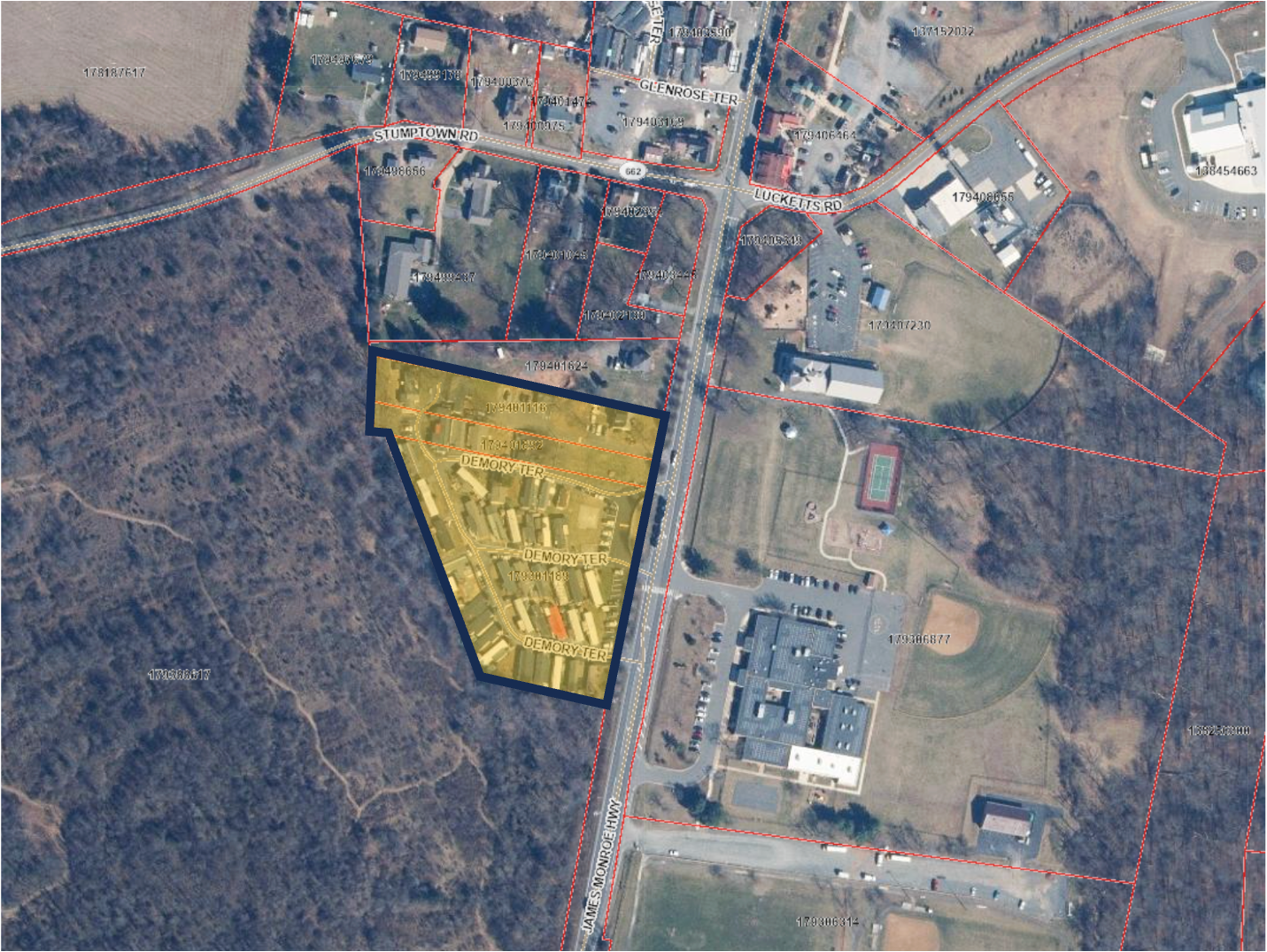
Hiway MHP sits in the center of Lucketts Village.
The three parcels are zoned CR-4 (Countryside Residential – Legacy):
- Parcel ID: 179-30-1189-000
- Parcel ID: 179-40-1892-000
- Parcel ID: 179-40-1116-000
CR-4 Legacy zoning was created to:
- Preserve rural village character
- Retain historic development patterns
- Prevent incremental sprawl
- Prohibit expansion of CR districts after December 13, 2023 without Board approval
This is explicitly a preservation district, not a growth district.
The Density Mismatch No One Can Ignore
The park currently contains 41 rentable units.
Under CR-4 base density:
- 1 lot per 40,000 square feet
The three parcels total approximately 4.29 acres (≈186,872 sq ft).
At base density, that equals:
4 conforming lots.
Even under the most aggressive “compact cluster” option:
- 1 lot per 10,000 square feet
That would yield approximately:
17–18 lots.
Not 41.
The current configuration exists because it predates today’s zoning standards. It survives under historic approvals or legal nonconforming protections — not because CR-4 would authorize it today.
If this site were proposed from scratch under current rules, it would not be approved at this density.
Overlay Constraints Further Limit Redevelopment
The zoning verification confirms the property is:
- Completely within Limestone Overlay
- Completely within Village Conservation Overlay
- Partially within Floodplain
- Partially within River & Stream Corridor Resource
Notably, 13 of the 41 existing units lie within the floodplain.
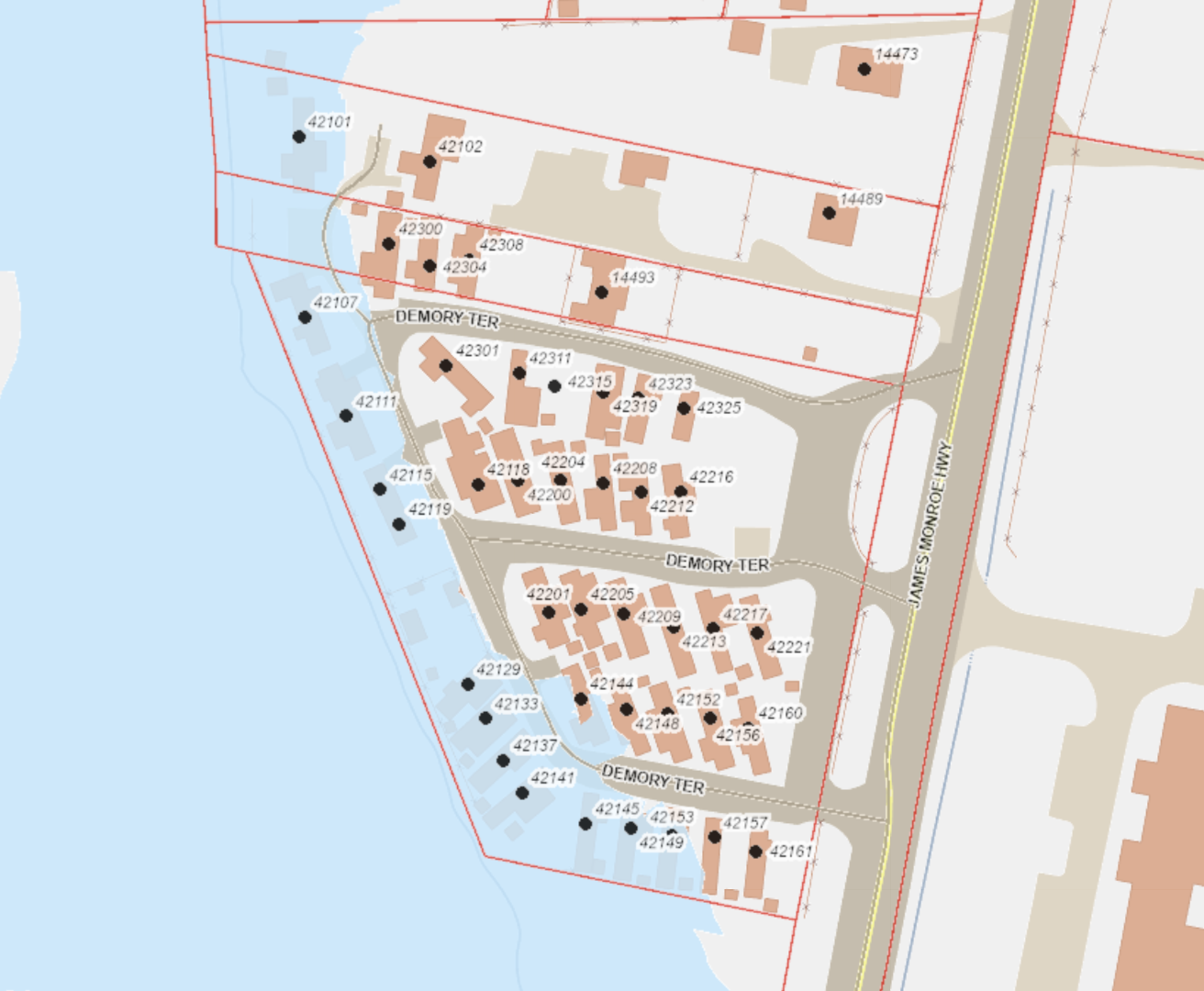
These overlays are not technical footnotes. They impose:
- Karst and sinkhole engineering requirements
- Strict stormwater and grading controls
- Contextual Village Conservation design standards
- Floodplain construction limitations
The gross acreage is not fully developable acreage.
Any significant redevelopment would trigger substantial regulatory review.
The $4 Million Question
$4,000,000 divided by 41 units equals roughly:
$97,500 per unit land basis.
No investor pays that price casually.
That valuation only makes sense if the buyer believes one of three things:
- The existing 41-unit density can continue indefinitely.
- The site can be redeveloped at similar density.
- Rezoning or political intervention could increase development rights.
The third possibility should concern every resident.
CR-4 Legacy districts cannot be expanded without Board approval. They were intentionally structured to prevent exactly this kind of incremental urbanization of rural villages.
If this transaction becomes a platform for rezoning, it directly challenges the preservation framework protecting Lucketts.
Manufactured Housing and Displacement Risk
Hiway MHP is home to at least 41 households.
Under Virginia law, residents had a 60-day window to organize and submit their own purchase offer.
If redevelopment follows acquisition, displacement becomes a real possibility.
Manufactured home communities are one of the last forms of naturally occurring affordable housing in rural Loudoun County.
Once removed, they are rarely replaced.
This is not just a zoning issue. It is a housing stability issue.
The Legal Fulcrum: Density Survivability
The zoning verification states that redevelopment after casualty may occur in accordance with the latest approved site plan.
That language is pivotal.
It implies density may survive under certain conditions — but not automatically under all conditions.
Unanswered questions include:
- Is the 41-unit layout legally nonconforming?
- Would demolition reset density to CR-4 standards?
- What constitutes “substantial modification”?
- Would major infrastructure replacement trigger compliance review?
If density resets to CR-4 standards, the redevelopment economics change completely.
If density survives regardless of modification, preservation zoning becomes effectively symbolic.
A Broader Pattern Along Route 15
This sale does not exist in isolation.
Lucketts has already seen:
- Lane Farm’s 67-home subdivision proposal tied to the bypass
- Additional subdivision activity along Spinks Ferry Road
- Increased farmland acquisitions positioned for future development
The pattern is clear:
Infrastructure expansion → land speculation → subdivision proposals → pressure to reinterpret zoning protections.
CR-4 Legacy was designed to prevent that cycle inside rural villages.
This transaction tests whether those protections are durable — or negotiable.
What Residents Should Demand
Before any redevelopment narrative advances, the community deserves:
- Written confirmation of the park’s zoning status
- Clarification on whether the 41 units are legally nonconforming
- Clear standards defining what triggers density loss
- Public transparency regarding any rezoning discussions
Silence will be interpreted as consent.
If Lucketts values its rural character, Village Conservation overlay, and preservation framework, this moment matters.
Because once preservation protections are weakened for one site, they become harder to defend for the next.
Final Thought
We now know:
- There is a confirmed $4 million offer.
- There are 41 rentable units on 4.29 acres.
- The property sits within CR-4 Legacy zoning and multiple environmental overlays.
CR-4 was written to preserve rural villages — not to enable speculative intensification.
Whether those protections remain meaningful will depend on what happens next.
And whether the community chooses to engage.