Historic Mullen House Demolished Without Permit in Lucketts
A house that stood along Stumptown Road for approximately 175 years is gone.
The Mullen House at 42388 Stumptown Road, one of the oldest documented residences in the historic Village of Lucketts, was demolished in October 2026 without the required Loudoun County demolition permit.
The building dated to approximately 1850 and was recognized as a contributing historic resource to both the Lucketts Historic District and the Catoctin Rural Historic District.
On October 16, Loudoun County officials confirmed that demolition was underway without a permit. The property owner reportedly agreed to stop work until the required approvals were obtained.
But over the following weekend, the remaining structure appeared to have been demolished.
On October 21, the County confirmed:
“As of this morning, October 21, 2026, no demolition permit has been applied for.”
The loss of the Mullen House raises two separate questions:
Why was a historic house demolished without the required permit, even after County intervention?
And perhaps more importantly:
How can Loudoun County claim to preserve the character of its historic villages when its current regulations offer so little protection to the buildings that define them?
Before and After: The Mullen House
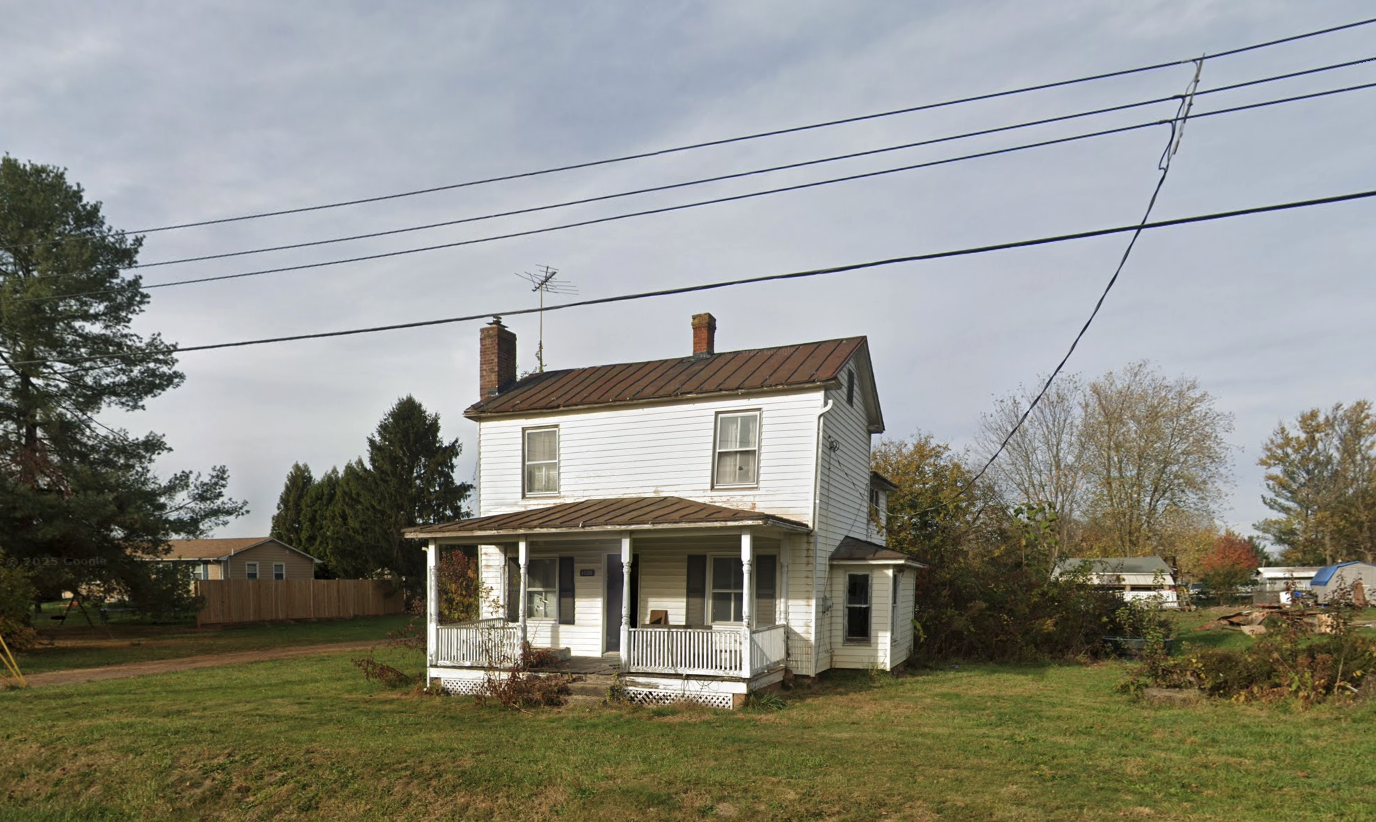
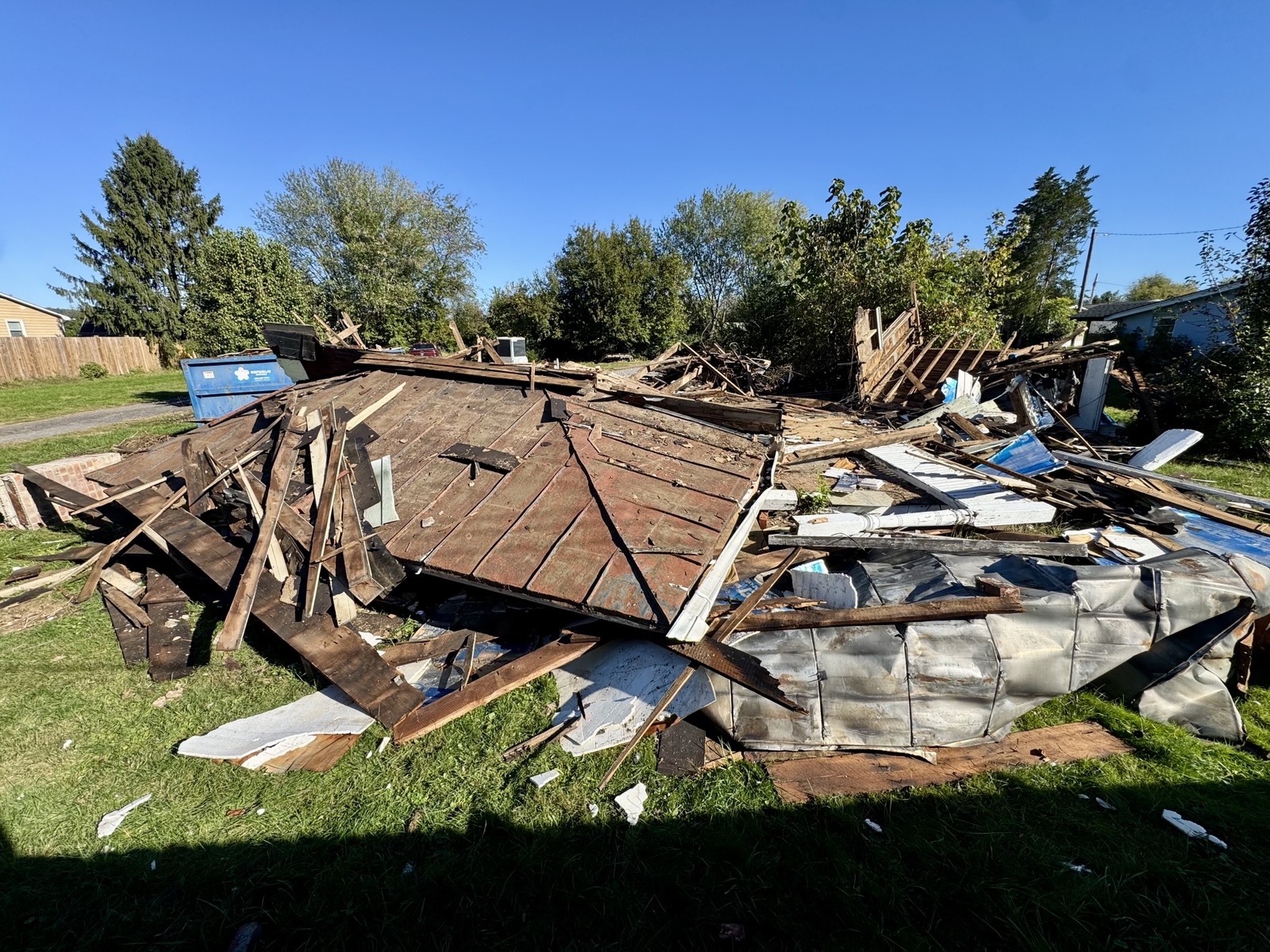
One of Lucketts’ Oldest Documented Homes
The historical significance of the Mullen House was not a recent discovery.
An architectural survey prepared for the Virginia Department of Transportation in 2014 identified the building as a two-story frame I-house constructed around 1850.
The survey was conducted by JMA (Milner Associates, Inc.) as part of the Route 15 and Route 662 Lucketts Safety Improvements project.
The building was recorded under three historic resource identifiers:
- VDHR 053-5441 — Mullen House
- 053-0012-0364 — Catoctin Rural Historic District
- 053-6145-0003 — Lucketts Historic District
The survey described the house as having a gabled rear addition, attached shed, and full-width front porch.
More importantly, the survey identified the Mullen House as a contributing resource to both historic districts and recommended no change to that status.
At approximately 176 years old, the house was among the oldest documented residences in the historic village.
The same survey identifies the nearby Frank/Arnold House as an early-19th-century farmstead, so the Mullen House was not necessarily the oldest house in Lucketts.
Nevertheless, the Mullen House represented a surviving example of the village’s mid-19th-century residential architecture.
Its demolition is a permanent loss to the community’s historic streetscape.
Read the Original 2014 Architectural Survey
The Mullen House’s historical significance was documented in the April 4, 2014 Reconnaissance Architectural Survey for Lucketts Safety Improvements, prepared by JMA (Milner Associates, Inc.) for VDOT.
The survey identifies the Mullen House as VDHR resource 053-5441, dates its construction to approximately 1850, and records its contributing status within both the Lucketts Historic District and the Catoctin Rural Historic District.
Read the 2014 Lucketts Architectural Survey (PDF)
The Mullen House is specifically identified on page 4, with its location shown on Figure 10, page 18. The survey also documents other historic buildings throughout Lucketts, providing valuable context for understanding the village’s architectural history.
October 16: County Confirms Demolition Without a Permit
On Friday, October 16, 2026, Wilson Meyer, Supervising Zoning Inspector with Loudoun County’s Department of Planning and Zoning, inspected the property following a complaint about demolition activities.
Meyer confirmed that the house was being demolished without the required permit.
In an email sent later that afternoon, Meyer wrote:
“The building at 42388 Stumptown Road has been partially demolished without an approved demolition permit.”
Meyer also confirmed that the property is within Loudoun County’s Village Conservation Overlay District.
He reported speaking with the property owner, who assured him that demolition would stop.
“I spoke with the property owner today, and he assured me that all demolition activities would cease until the required County approvals have been obtained.”
Meyer referred the matter to the Department of Building and Development under LEx Case #18806186.
At that point, the County was aware of the unauthorized demolition, and the owner had reportedly agreed to stop work.
October 19: The Rest of the House Appears to Have Been Demolished
Despite the reported agreement to stop demolition, the remaining house appeared to have been demolished over the weekend.
On Monday, October 19, the County was notified:
“It looks like they tore down the rest of the house this weekend. Very disappointing as we were supposed to stop.”
Photographs from October 20 show the former residence reduced to piles of timber framing, metal roofing, siding, and other debris.
The two-story house and its recognizable architectural features are no longer standing.
The available County correspondence does not establish whether a formal stop-work order had been issued.
However, the distinction between a verbal assurance and a formal enforcement order does not change the underlying permitting issue.
The County had confirmed that demolition required a permit, and no permit had been obtained.
October 21: Still No Demolition Permit Application
On October 21, Jacob Hambrick, Principal Planner with Loudoun County’s Department of Planning and Zoning, responded to additional questions about the demolition.
When asked whether a permit had been applied for or issued, Hambrick stated:
“As of this morning, October 21, 2026, no demolition permit has been applied for.”
When asked whether a permit was required, he confirmed:
“Any demolition of a residential structure is required to obtain the proper permits.”
The County also confirmed that LEx Case #18806186 is a Building Code case being handled through Building and Development.
Questions about potential violations, enforcement actions, and penalties were referred to that department.
As of October 21, the available correspondence does not establish whether the County has issued a formal Notice of Violation, stop-work order, or other enforcement action.
That leaves a significant question unanswered:
What happens when a property owner demolishes a building without a permit, is advised to stop, and the remaining structure is subsequently removed?
Obtaining a demolition permit after the fact would not change the fact that the original demolition began without the required approval.
Whether the County will pursue enforcement action remains to be seen.
Historic Significance Was Already Documented
The Mullen House was not an unidentified old building whose significance needed to be discovered.
Loudoun County officials acknowledged that the property had been surveyed multiple times between 1988 and 2013.
The County confirmed that it was considered a contributing resource to the Catoctin Rural Historic District and had previously been recommended eligible for individual listing on the National Register of Historic Places.
The 2014 VDOT survey additionally identified the house as contributing to the Lucketts Historic District.
The Lucketts Historic District itself was determined eligible for the National Register of Historic Places in December 2007.
However, there is an important legal distinction.
Neither National Register eligibility nor contributing status within these historic districts automatically prohibits privately funded demolition.
The County has explained that outside a locally designated Historic Overlay District, demolition is generally a property owner’s right, subject to applicable permitting and other legal requirements.
That means a building can be historically significant, formally documented, and recognized as contributing to a historic district without being protected from demolition.
The Mullen House demonstrates the consequences of that distinction.
Loudoun County Is Not Conducting the Historic Assessments Called for in Its General Plan
The correspondence with County officials revealed another significant issue.
Loudoun County’s 2019 General Plan, Implementation Action NEHR 5.1.I, calls for historic significance assessments before demolition permits are issued for buildings 50 years old or older.
The Mullen House was approximately 176 years old.
Yet the County acknowledged that it does not currently conduct those assessments as described in the General Plan.
In an October 21 response provided by Historic Preservation Planner Will Milone through Jacob Hambrick, the County explained that NEHR 5.1.I is a policy direction rather than a mandatory regulatory requirement.
Instead, demolition permitting staff notify the Preservation Team when an application involves a structure more than 50 years old.
Preservation staff may then contact the owner to request permission to photograph the property.
When time permits, the photographs may be used to create a basic architectural survey record in the Virginia Cultural Resource Information System (V-CRIS).
The County explained:
“We do not conduct a historic significance assessment as described in the general plan because we do not have the staffing to carry this out across the board.”
Staff also confirmed that the Preservation Team had been notified about the Mullen House and was coordinating efforts to contact the owner.
This raises a fundamental question about the County’s preservation policies.
If Loudoun County’s General Plan calls for historic significance assessments before demolition, but those assessments are not routinely conducted, what practical protection does the policy provide?
In the case of the Mullen House, even the existing notification process was bypassed at the outset because demolition began without an application.
By the time County officials became involved, the building was already partially demolished.
The Village Conservation Overlay District Does Not Protect Historic Buildings From Demolition
The Mullen House was also located within the Village Conservation Overlay District (VCOD).
The VCOD is intended to help maintain the traditional character and development patterns of Loudoun County’s historic villages.
But according to the County, Section 5.07 of the Zoning Ordinance regulates new construction, additions, and certain development activities.
It does not restrict demolition of existing structures.
In other words, the County can regulate aspects of what replaces a historic building without necessarily protecting the historic building itself.
That is a significant limitation for a district intended to conserve village character.
When asked whether the County had considered the absence of demolition review requirements within the VCOD, Hambrick responded:
“At this time, the County has not considered the absence of demolition review requirements within the VCOD.”
This is a policy gap worth examining.
Historic villages are not defined solely by the appearance of new buildings.
They are defined by the original structures, settlement patterns, and architectural history that remain.
Once those buildings are gone, regulating their replacements cannot recover what was lost.
Who Owns the Property?
Loudoun County real estate records identify STAR INVESTMENT GROUP, LLC as the owner of the Mullen House property.
The company owns two adjoining parcels:
| Property | Parcel ID | Acreage |
|---|---|---|
| 42388 Stumptown Road | 179400376000 | 0.51 |
| 42398 Stumptown Road | 179401474000 | 0.31 |
| Combined | 0.82 |
Both properties were transferred through instruments recorded on September 1, 2021.
Virginia State Corporation Commission records identify STAR INVESTMENT GROUP, LLC as an active Virginia limited liability company formed in August 2016.
The company’s registered agent is Gurdeep Kaur Lail.
The registered agent designation does not establish who directed or performed the demolition.
Common ownership of the two parcels also does not establish that redevelopment is planned.
As of October 16, County officials reported no pending or approved redevelopment applications for the Mullen House property.
The purpose of the demolition remains unclear.
What Happens Next?
Several important questions remain unanswered.
Building Code Enforcement
The County has confirmed that demolition began without the required permit.
It remains unclear:
- Whether a formal Notice of Violation has been issued
- Whether Building and Development has completed an inspection
- Whether demolition continued after the October 16 assurance to stop
- Whether enforcement penalties or other corrective measures will be pursued
- Whether the property owner will be required to obtain after-the-fact approvals
The investigation is being handled through LEx Case #18806186.
Historic Preservation Documentation
The County’s Preservation Team has confirmed awareness of the situation.
However, the house has apparently been completely demolished, leaving limited opportunity for additional architectural documentation.
The 2014 VDOT survey and earlier historic resource records may now represent some of the most important surviving documentation of the building.
Future Development
The property owner also owns the adjoining parcel at 42398 Stumptown Road.
There is no confirmed redevelopment proposal associated with the demolition.
Any future applications should be reviewed in light of the site’s location within the Village Conservation Overlay District and the historic character of the surrounding community.
County Preservation Policies
The Mullen House incident raises broader questions that extend beyond a single property.
Should Loudoun County require meaningful historic review before demolition permits are issued for buildings more than 50 years old?
Should the Village Conservation Overlay District provide additional review for demolition of contributing historic resources?
And should the County establish clearer enforcement procedures when unauthorized demolition is discovered?
These are questions worth putting before County leadership and the Board of Supervisors.
A Loss That Cannot Be Reversed
The Mullen House stood along Stumptown Road through generations of change.
Constructed around 1850, it survived the Civil War era, the growth of the village, the arrival of modern highways, and the transformation of northern Loudoun County.
For approximately 175 years, it remained part of the landscape of Lucketts.
Now it is gone.
Property owners have legitimate rights, and historic recognition does not automatically prohibit demolition.
But those rights do not eliminate the requirement to obtain permits.
Nor should the absence of mandatory historic review prevent Loudoun County from reconsidering whether its preservation policies adequately protect the communities they are intended to serve.
The Mullen House was recognized as historically significant long before its demolition.
It was documented in multiple surveys.
It contributed to two historic districts.
It stood within a Village Conservation Overlay District.
And yet it was demolished without the required permit.
The question is no longer whether the Mullen House was worth preserving.
The question is what Loudoun County will do to prevent the next historic loss.
Sources and Documentation
- Reconnaissance Architectural Survey for Lucketts Safety Improvements, Routes 15 and 662 (PDF), JMA (Milner Associates, Inc.), April 4, 2014. VDOT Project 0015-053-128, VDHR File 2007-0494. See page 4 for the Mullen House (VDHR 053-5441) and page 18 for its mapped location.
- Loudoun County Department of Planning and Zoning correspondence, October 16–21, 2026, including Wilson Meyer, Jacob Hambrick, and Will Milone.
- Loudoun County 2019 General Plan, Implementation Action NEHR 5.1.I.
- Loudoun County Zoning Ordinance, Section 5.07, Village Conservation Overlay District.
- Loudoun County real estate assessment records, PINs 179400376000 and 179401474000.
- Virginia State Corporation Commission, STAR INVESTMENT GROUP, LLC, Entity ID S6349064.
- Loudoun County Building and Development referral, LEx Case #18806186.